
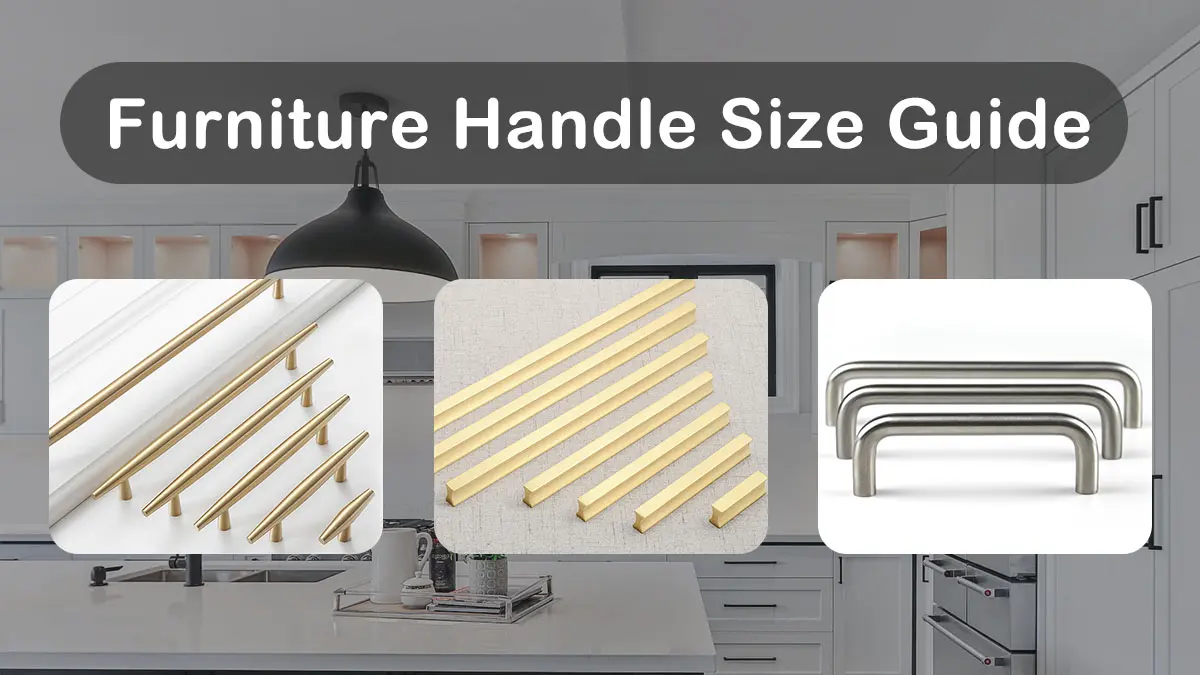
Furniture Handle Size Guide: How to Choose the Perfect Fit
Selecting the right furniture handle size is crucial for both functionality and aesthetics. Whether it is for cabinets, doors, or drawers, improper sizing can lead to installation challenges, reduced usability, or even safety risks. This article provides a comprehensive guide to choosing handle sizes based on furniture dimensions and usage scenarios.
1. Key Measurement Parameters
Before selecting a handle, three critical measurements must be considered: door/drawer dimensions, handle hole spacing, and material thickness.
- Door/Drawer Dimensions:
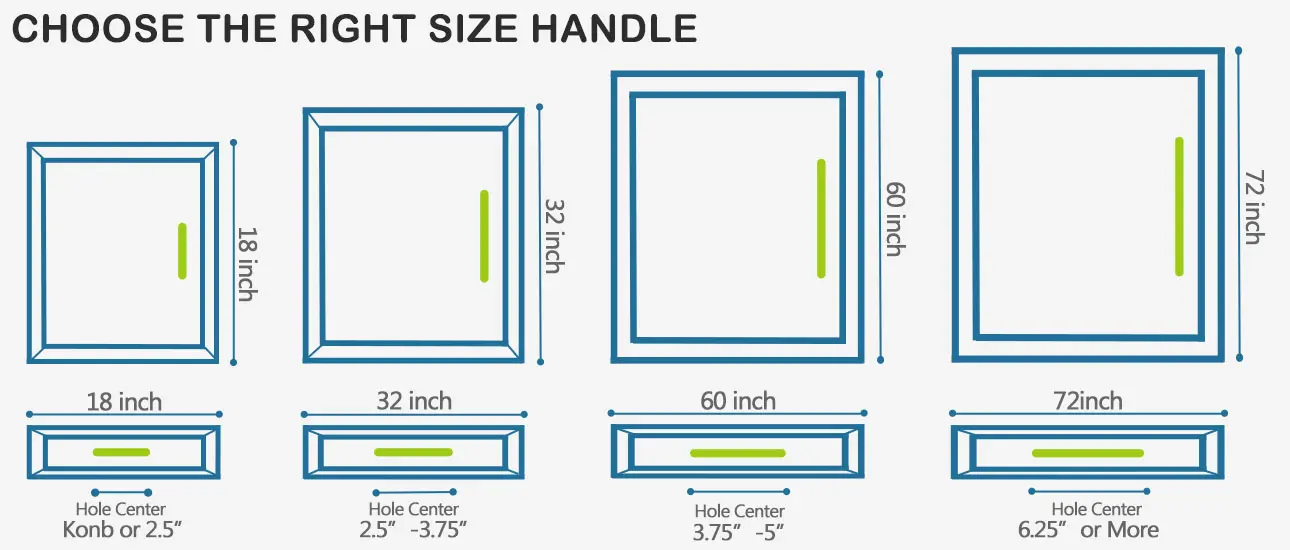
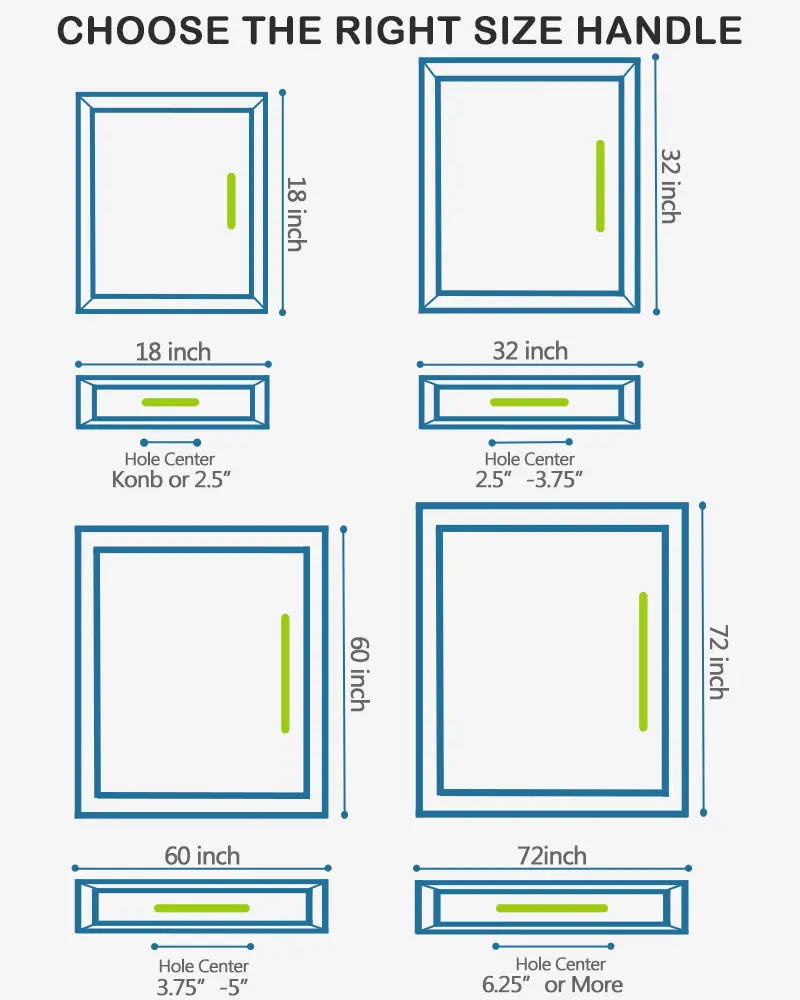
- For cabinet doors or drawers under 50 cm (19.7 inches) in width, handles with a hole spacing of 64 mm (2.5 inches) are recommended.
- For doors/drawers between 50–80 cm (19.7–31.5 inches), opt for 96 mm (3.8 inches) hole spacing.
- Larger furniture pieces over 100 cm (39.4 inches) require handles with 128–160 mm (5–6.3 inches) hole spacing for balanced proportions.
- Material thickness:
- Standard cabinet doors are 18 mm (0.7 inches) thick, while exterior doors are typically 45 mm (1.8 inches). Ensure the handle’s spindle length matches the furniture thickness
2. Handle Sizes for Different Scenarios
- Kitchen Cabinets:
- Upper Cabinets: Install handles 12–15 cm (4.7–5.9 inches) from the bottom edge of the door for ergonomic access.
- Lower Cabinets: Position handles 4–5 cm (1.6–2 inches) from the top edge to avoid bending excessively.
- Drawers: Use shorter handles (e.g., 64–96 mm hole spacing) for small drawers and longer handles (128 mm) for wider drawers to ensure smooth operation.
- Wardrobes and Tall Cabinets:
- For doors over 150 cm (59 inches) in height, use handles with 160 mm (6.3 inches) hole spacing to maintain visual balance.
- For children’s furniture, position handles at 80–85 cm (31.5–33.5 inches) from the floor for easy access
- Residential and Commercial Doors:
- Standard Doors: Handles are typically installed 90–105 cm (35.4–41.3 inches) from the floor, aligning with adult elbow height for natural operation
- ADA Compliance: In commercial spaces, handles should be placed between 86–122 cm (34–48 inches) to accommodate accessibility needs

3. Material and Style Considerations
- Material:
- Stainless steel and zinc alloy handles offer durability and corrosion resistance, ideal for kitchens and bathrooms.
- Wooden handles suit rustic or Scandinavian interiors but require regular maintenance.
- Style:
- Modern minimalist designs favor sleek, linear handles (e.g., 3–5 cm wide).
- Traditional or ornate styles pair well with decorative handles (e.g., brass knobs or ceramic pulls).
4. Installation Tips
1.Double-Check Measurements: Use templates to mark drilling points accurately. For example, the distance from the door edge to the handle center should be 2.5 cm for most cabinets.
2.Test Ergonomics: Ensure handles feel comfortable to grip. For elderly users, avoid sharp edges and prioritize lever-style handles for easier operation.
3.Safety: Round-edged handles are safer for households with children. Avoid overly long handles in narrow spaces to prevent accidents.
Conclusion
References
1.Standard handle measurements for cabinets and doors
2.Ergonomic design principles for accessibility
3.Material and style recommendations







One Comment