Kitchen Cabinet Hardware for Furniture Manufacturing
Kitchen cabinet hardware plays a critical role in both functionality and durability for kitchen furniture. In residential and commercial kitchen projects, hardware must withstand frequent use, humidity, and regular cleaning while maintaining consistent appearance across large production batches.
Typical Kitchen Cabinet Hardware Types
Kitchen cabinets commonly use a combination of cabinet handles and cabinet knobs, depending on door size, cabinet layout, and overall design style.
Longer pulls are often applied to base cabinets and drawers to provide better grip and control, while knobs or shorter pulls are commonly used on upper cabinets and lightweight doors.

Materials and Finishes for Kitchen Environments
Stainless Steel Handles and Knobs
Stainless steel hardware is commonly selected for kitchen cabinets due to its excellent corrosion resistance and durability. It performs well in humid environments and withstands frequent cleaning, making it suitable for both residential and commercial kitchen applications.
Aluminum Alloy Cabinet Hardware
Aluminum alloy handles offer a lightweight structure with stable surface finishes. Anodized aluminum is often used in modern kitchen designs where clean lines, consistent color tone, and ease of installation are important considerations for large-scale cabinet production.
Zinc Alloy Hardware for Kitchen Cabinets
Zinc alloy hardware allows greater flexibility in design details and surface textures. It is commonly used in kitchen cabinet projects where decorative elements and complex shapes are required, while maintaining reliable strength for everyday use.
Finish Stability in Kitchen Environments
In kitchen cabinet applications, finish stability is a key consideration due to exposure to moisture, oils, and cleaning agents. Common finishes include brushed, matte, and coated surfaces designed to maintain consistent appearance across long-term use and repeated cleaning cycles.
Design and Installation Factors
Hole Spacing and Mounting Compatibility
Standardized hole spacing is critical for kitchen cabinet production efficiency. Hardware designed with consistent mounting dimensions helps reduce installation errors and simplifies replacement during long-term use. Selecting handles that align with common cabinet door and drawer specifications improves overall assembly speed.
Projection and User Ergonomics
Handle projection affects both usability and safety in kitchen environments. Proper projection allows comfortable grip while avoiding excessive protrusion that may interfere with movement in narrow kitchen spaces. Ergonomic designs help ensure smooth daily operation across high-frequency use.
Cabinet Door Thickness and Load Requirements
Kitchen cabinet doors vary in thickness and weight depending on material and construction. Hardware selection should consider load distribution and fastening strength to prevent loosening over time, especially on frequently used base cabinets and drawers.
Installation Consistency for Large-Scale Production
In large-scale kitchen cabinet manufacturing, consistency in hardware dimensions and finishes ensures smooth installation across production batches. Stable specifications reduce adjustment time on the assembly line and support reliable quality control throughout the project lifecycle.
Custom Kitchen Cabinet Hardware for Project-Specific Requirements
Standard kitchen cabinet hardware works well for general applications, but many projects require adjustments in size, finish, or mounting details. Custom hardware allows manufacturers and project buyers to align functionality, aesthetics, and installation requirements with specific cabinet designs.
Customization Options Available
Handle length, hole spacing, and overall proportions
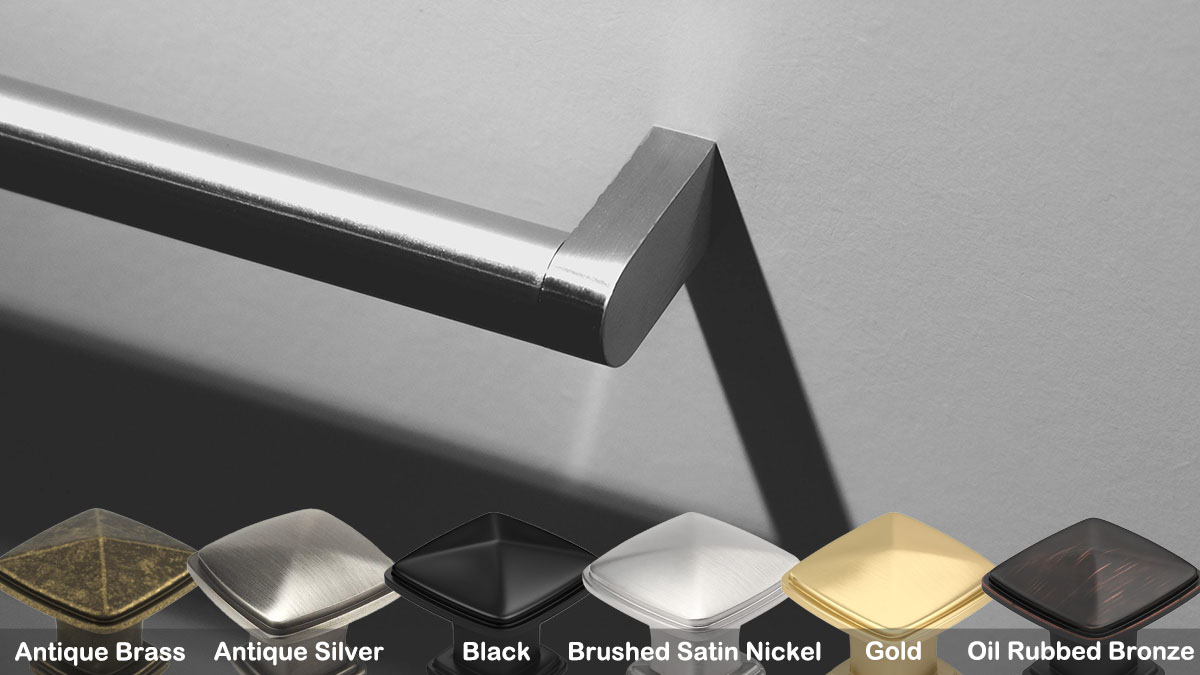
Surface finishes to match cabinet panels and kitchen themes
Mounting methods for different door thicknesses
Logo or branding requirements for OEM projects
Typical Customization Scenarios
Custom kitchen cabinet hardware is commonly used in large-scale kitchen projects, branded cabinet collections, and export-focused furniture lines. In these cases, consistency across batches, finish stability, and repeatable specifications are more important than one-time visual impact.
From Concept to Production
Requirement review based on cabinet drawings or references
Specification confirmation including dimensions and finishes
Sample development for functional and visual validation
Batch production with quality consistency control
Custom and Standard Hardware Work Together
Custom kitchen cabinet hardware is often developed based on existing standard designs. This approach ensures reliable installation performance while allowing adjustments to meet project-specific requirements. It also helps control cost and lead time in long-term cooperation.
Designed for B2B Kitchen Projects
- Kitchen cabinet manufacturers
- Furniture factories
- Project contractors and developers
- Hardware wholesalers serving kitchen brands
Start Your Kitchen Cabinet Hardware Inquiry
Share your cabinet type, project scale, and customization requirements. Our team will review your needs and respond with a suitable hardware solution.